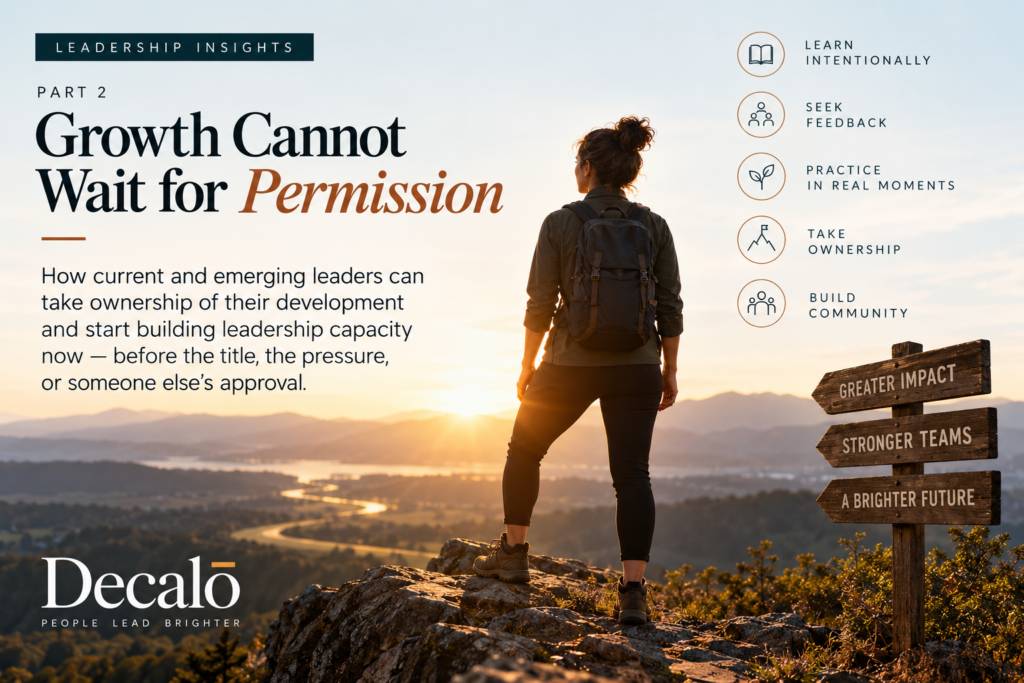
The first part of this series named the organizational cost of deprioritizing leadership growth. Now the question shifts inward: what can current and emerging leaders do when growth is delayed, underfunded, or never formally offered? The answer begins with ownership. Growth cannot depend entirely on whether a company has the budget, foresight, or urgency to invest. Leadership capacity can begin now, before a title changes, before pressure increases, and before someone else decides who is ready.
I still remember my first experience as a manager. I was excited, determined to grow the organization, and eager to prove I was ready for more responsibility. But within the first week, my only team member, Elaine, was anxious, overwhelmed, and resistant to my instructions. I thought my intentions were good. I wanted results, collaboration, and progress. Then my manager asked a question I wasn’t prepared to answer: “Do you
know how you are affecting Elaine?” At the time, I relied on my intent to make my case. It took years to grasp the deeper lesson: leadership growth cannot wait until we already have the title, the team, or the pressure. By then, our impact is already shaping someone else’s experience.
That experience did not make me a better leader overnight, but it did change what I believed responsibility required. Over time, I began seeking ways to grow wherever I could: through formal study, coaching, reading, certification, leadership assessments, facilitation practice, work on conflict dynamics, and opportunities to better understand how people, teams, and systems grow. Much of that growth was self-directed, and some of it was self-funded. I did not wait for one organization to build it all for me. I pursued it because I had learned that good intentions were not enough; leadership requires preparation, practice, feedback, reflection, and the humility to keep becoming.
That early lesson still shapes how I think about leadership growth. Organizations have a responsibility to create the conditions for development, but individuals cannot wait for those conditions to appear before they begin. Current and emerging leaders do not have to wait to be selected, sponsored, promoted, or formally enrolled before they start practicing the habits leadership will require. They can begin making leadership growth personal before someone else makes leadership responsibility official.
The assumption is tempting: if someone excels at the work, they can lead others to do it. But leadership is not simply excellence multiplied. It is excellence translated through people, priorities, pressure, and trust. Promotion does not automatically create leadership capacity. Technical excellence may earn the opportunity to lead, but it does not prepare a person to shape culture, develop talent, resolve conflict, set strategy, align
teams, cast vision, or make decisions that affect people beyond their own performance.
Individual contributors are primarily responsible for producing excellent work through their own skill, discipline, and execution. Leaders are responsible for creating the conditions in which others can do excellent work together. That shift requires moving from personal output to shared outcomes, from task completion to team alignment, from expertise to coaching, from problem-solving to capability building, and from responding to today’s work to helping people see and prepare for what comes next. In simple terms, individual contributors ask, “How do I do this well?” Leaders ask, “How do we make this work clear, sustainable, and meaningful for the people responsible for delivering it?”
Individuals can begin by seeking feedback before it is offered, asking for coaching before it is required, studying how effective leaders make decisions, practicing courageous conversations, volunteering for stretch assignments, building emotional intelligence, and learning how to align people around purpose rather than relying solely on authority. They can also study strategy, practice translating goals into priorities, learn to develop and communicate vision, and ask to observe or support planning conversations that address trade-offs, resources, and long-term direction.
Practical leadership growth can start small: read one leadership book each quarter, request one piece of direct feedback each month, find a mentor outside the reporting chain, lead a meeting with clearer outcomes, practice delegating with context rather than instructions, reflect after difficult conversations, and build a personal leadership development plan with specific behaviors to strengthen over time.
Grassroots leadership success often begins in ordinary moments. A high-performing analyst who documents decision criteria can help a team make better choices before becoming a manager. A project coordinator who clarifies meeting outcomes and next steps can reduce cross-functional confusion. A senior specialist who mentors newer employees can strengthen the talent pipeline without waiting for a formal program. A team member who names risks early, invites quieter voices into the discussion, or translates strategy into practical priorities is already practicing leadership.
These examples matter because they show that leadership development can begin in the work people are already doing, but personal effort is strongest when it is not isolated. My own growth was self-directed and, at times, self-funded, but it would have moved faster with more consistent strategy, practice, feedback, and community. Reading, reflection, mentoring, stretch assignments, and self-directed learning all matter. What turns effort into development is having a way to apply what you are learning, test it in real situations, receive honest feedback, and refine your approach with people who are also practicing. The point is not to wait for a company to fund every step, and it is not to grow alone. The point is to take ownership of growth and seek the people, practices, and environments that make that growth sustainable.
The strongest leadership cultures are not built solely from the top down. They are built when people at every level decide that their growth is not optional, because someone else’s experience of work is already being shaped by the leader they are becoming.
The Call Forward
If organizations want to thrive, not just survive, they must treat leadership development as a strategic imperative, not a discretionary expense. The cost of developing leaders is measurable. The cost of neglecting leadership growth is paid in lost trust, slower execution, uneven standards, missed opportunities, and a future the organization is no longer prepared to lead.
This is why I continue to work in this space. My own experience has shown me that leadership development is both deeply personal and undeniably organizational. Companies need leaders prepared to advance strategy, strengthen culture, build alignment, and carry vision forward. Individuals need to recognize that their influence grows long before their titles change. The work cannot belong to one side alone. If organizations keep pulling back and individuals keep waiting, decline will keep compounding. But when organizations create the conditions for growth and people choose to own their development, leadership becomes more than a role to fill — it becomes a future worth building.
Choose one step this week. Ask for feedback before it is offered. Find a mentor outside your reporting chain. Find a community where you can practice, test, and refine how you lead. Volunteer for work that stretches your judgment. Build a personal leadership development plan and name the behaviors you need to practice next. If you are an executive, make leadership growth visible, expected, and supported before promotion. If
you are an emerging leader, stop waiting for permission to begin. The leadership culture of the future is being shaped right now by what people choose to practice, tolerate, invest in, and ignore. The question is no longer whether leadership development matters. The question is whether you will take responsibility for the growth someone else will depend on one day.
About the Author
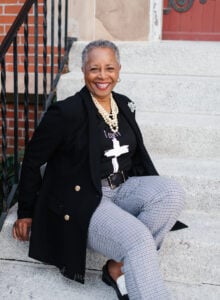
Katherine Coles is the CEO of Decalō Leaders, where she helps individuals and organizations strengthen leadership capacity, culture, and ownership of growth. She is committed to equipping people before leadership responsibility becomes overwhelming and writes about the conversations leaders often think about but rarely say out loud.
Join her to continue the conversation on “What Leaders Don’t Say,” a podcast coming in
2027.