
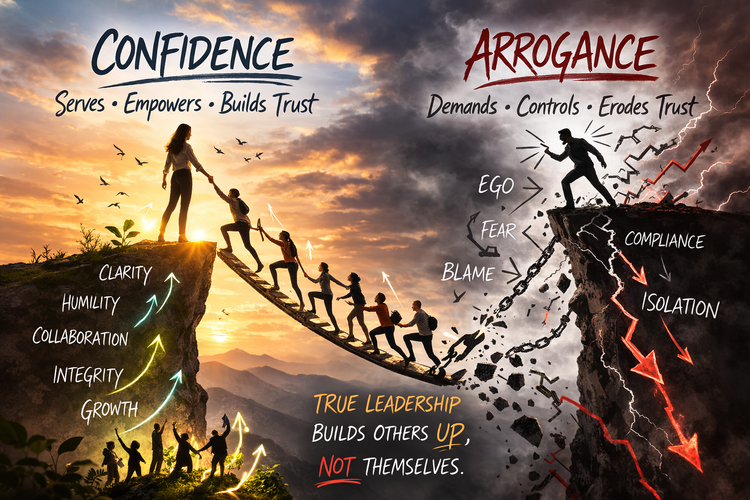
In leadership, few traits are as misunderstood as confidence. We celebrate it, coach toward it, and expect it from those we follow. Leadership development programs encourage participants to project confidence, yet few define it. Leaders who believe they are projecting confidence may be perceived as arrogant. The line between the two is thin, and without a clear definition, leaders cross it more often than they realize. At Decalō Leaders, we believe confidence serves others, while arrogance is a signal. One builds trust. The other erodes it. One opens doors; the other closes them. One elevates a team, the other isolates the leader. Confidence is rooted in clarity of values, purpose, and capability. It’s the quiet assurance that says, “I know what I bring, and I know what I don’t.” Arrogance, on the other hand, is fueled by insecurity and the need to be seen as more than one truly is. It’s often characterized by “I know what I bring,” while ignoring or feigning what one doesn’t. Confident leaders don’t need to dominate a room, nor do they try; their steadiness and commitment to serve speak for them. By contrast, arrogant leaders rely on volume, territory, and control.
Confident leaders invite collaboration. They create psychological safety, welcome challenges, and share credit. Arrogant leaders demand compliance, selectively share or spin information, and treat collaboration as a threat. The result? Confidence builds high-trust, high-performance cultures. Arrogance creates fragile ones. A confident leader knows who they are and who they’re becoming. Their leadership flows from identity, not image. Arrogant leaders are preoccupied with perception, constantly curating and protecting their image. Identity is stable; ego is exhausting. Leading from identity fosters integrity, while leading from ego produces defensiveness. Confidence grows through practice – consistently clarifying values, mastering key principles, testing personal impact, building trust, and following through on commitments. Arrogance grows by avoiding feedback, ignoring accountability, rejecting vulnerability, and refusing growth. Every leader faces moments of insecurity. Confidence is choosing grounded truth; arrogance is choosing self-protection.
While influence is the true measure of a leader, their impact on others is their legacy. Confident leaders elevate others. Arrogant leaders diminish. Confidence isn’t just a personal trait; it’s a cultural investment. It’s the foundation of principled leadership. It enables leaders to act with clarity, integrity, and consistency, empowering themselves and their teams. Confident leaders are grounded in their values and clear about their purpose. This clarity allows them to make principled decisions, even under pressure, and to communicate expectations transparently. Teams respond to this steadiness with trust and alignment. Leaders secure in their abilities welcome diverse perspectives, share credit, and foster open dialogue. They create psychological safety and invite collaboration. This collaborative environment cultivates ethical behavior and high performance. Confident leaders demonstrate humility. They acknowledge their strengths and challenges, seek feedback, and admit their mistakes. This self-awareness interrupts ego-driven decisions and models a commitment to integrity. Confident leaders invest in building trust to unlock their team’s potential and encourage innovation. They demonstrate faith in the team’s ability, building the team’s confidence to manage increasing responsibilities and take ownership of team results. Additionally, a truly confident leader makes ethical decisions, modeling cultural expectations to serve. Ultimately, confidence is not forceful but calm, principled, and grounded in truth, creating organizational cultures where people can thrive.
The Impact of Arrogance
Arrogance undermines principled leadership and damages organizational culture. Arrogant leaders often dismiss other perspectives, avoid feedback, and prioritize their reputations over the team’s well-being. They erode trust and create a toxic work environment. Arrogant leaders typically favor a command-and-control style. They do not seek trust but expect complete compliance; disagreement with their directions leads to retaliation, and teams are siloed, preventing collaboration. Team members become disengaged, creativity is unwelcome, and morale declines. Perception, status, and self-interest guide an arrogant leader’s decisions. They rarely accept accountability for outcomes. Research shows that unethical behavior, organizational scandals, and catastrophic losses often result from arrogant leadership. Teams rarely follow an arrogant leader; they may comply, but they will not truly follow, because they are often stripped of power, undervalued, and treated as insignificant workers.
Personal Reflection: When Confidence Slips into Arrogance
A few years ago, a new member joined our team. I was a lead consultant, and my client hired them as an employee backfill. They held a series of meetings with all team members to introduce their skill sets, learn each member’s unique gifts, and gain insights into completed and current projects. When we met, she came prepared with many questions — why we chose one approach over another, whether we had considered alternatives, and whether we should have done things differently.
Instead of welcoming her curiosity and engaging openly, I responded defensively. My answers, meant to clarify, were perceived as dismissive. The conversation quickly deteriorated, and by the end of the call, I was labeled arrogant, defensive, and lacking credibility. Reflecting on this experience, I see how easily confidence can slip into arrogance. True confidence would have meant listening openly, inviting her perspective, and engaging collaboratively with curiosity and interest. Instead, my defensiveness signaled insecurity and ego, closing the door to trust and partnership.
This moment taught me that confidence is about being grounded, receptive, and empowering of others, while arrogance is about self-protection and dominance. Leadership is not just about intent but also about the culture and trust you build. It took months to navigate the resulting conflict and rebuild an effective working relationship — one that eventually evolved into trust and mutual respect. My arrogance not only affected the new team member’s integration and perception of the team but also drew the rest of the group into side conversations, coalition building, and fragile interactions. Ultimately, the cultures we build — and the relationships we nurture — reveal which posture we choose: confidence or arrogance.
Practical Strategies for Building and Sustaining Confidence
Cultivating confidence requires intentional effort and commitment to lead with integrity, influence, and service. Consider these seven strategies to develop or strengthen your confidence:
1. Clarify Your Values. Reflect on what matters most to you and your organization. Write down your core values and revisit them regularly.
2. Practice Radical Self-Awareness. Seek feedback from trusted colleagues. Embrace vulnerability. Identify your strengths and areas for growth.
3. Master Key Principles and Competencies. Invest in continuous learning. Attend workshops, read widely, and practice key principles until they become second nature.
4. Follow Through Consistently. Keep your promises and commitments. Reliability builds trust. The more you feel trusted, the more confident you will feel in yourself and your team.
5. Empower Others. Delegate meaningful tasks, reward autonomy, and celebrate team achievements. Confidence grows when you see others succeed.
6. Welcome Challenge and Encourage Productive Conflict. Invite diverse perspectives and developmental feedback. Use challenges as opportunities to learn and grow.
7. Reflect Regularly. Set aside time for reflection. Ask yourself: “Do people bring me the truth, or only what they think I want to hear? Do I share credit easily? Do people grow under my leadership?”
At Decalō Leaders, confidence isn’t loud or self-focused. It’s calm, principled, and grounded in truth. Confidence says, “I am clear. I am capable. I am committed to growth.” Arrogance says, “I am above.” One builds leaders people choose; the other builds leaders people tolerate.
How to Come Back from an Arrogant Performance
Everyone has moments where their confidence slips into arrogance, especially under pressure or when feeling challenged. What matters most is how you respond and recover. Here are seven strategies to turn an arrogant moment into an opportunity for confident, principled leadership and growth:
1. Acknowledge and Own Your Behavior. Admit to yourself, and, if appropriate, to others, that your actions or words reflect an arrogant or defensive response. Taking responsibility models integrity and builds trust.
2. Seek Feedback and Listen. Invite feedback from those affected. Ask open-ended questions about how your behavior impacted them. Listen, and resist the urge to justify or respond with anything other than “thank you.” This shows humility and a genuine desire to improve.
3. Apologize Sincerely. Offer a sincere apology to anyone hurt by your actions and to the team. Be specific about what you regret and how you plan to change. A heartfelt apology can begin to repair trust.
4. Reflect and Learn. Take time to reflect on what triggered your arrogance. Was it insecurity, stress, or a need to prove yourself? Understanding the root cause helps you respond differently next time.
5. Commit to Growth. Turn the experience into a learning opportunity. Set intentions to practice humility, invite collaboration, and empower others. Consistently follow through on these commitments.
6. Rebuild Relationships. Re-engage with your team or colleagues. Show through your actions that you value their perspectives and contributions. Over time, trust and respect can be restored.
7. Model Confidence, Not Ego. Demonstrate grounded confidence by being receptive, open, and supportive. Let your leadership be defined by how you lift others up, not by how you defend your status.
Recovering from an arrogant exchange isn’t about perfection; it’s about progressive growth. By embracing humility, seeking feedback, and committing to principle-based leadership, you can transform a setback into a powerful catalyst that inspires others to follow you.